Contents(10)
- 1Quickly explained
- 2Why this date is important (and what it means for you)
- 3The compact timeline (Douyin → TikTok → Musical.ly)
- 4Who is behind it? (ByteDance, Founders & Platforms)
- 5What specifically changed in 2018?
- 6How you use the knowledge in practice (content, timing, formats)
- 7Background: Why TikTok in particular took off
- 8Mini story: Two posts, two worlds
- 9Frequently asked questions (FAQ)
- 10Conclusion
Quickly explained
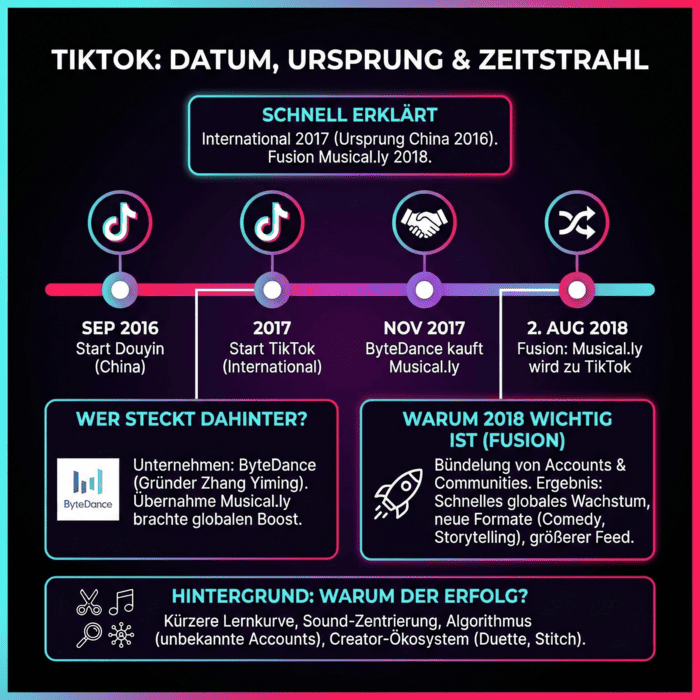
when did tiktok come out? Short answer: International 2017. The app has already been launched in China in September 2016 under the name Douyin. On August 2, 2018 was also Musical.ly worldwide were transferred to TikTok - an important step for the app's boom. This data is well documented by industry reports and news reports.
Why this date is important (and what it means for you)
For users, TikTok seems to have „suddenly arrived“. In fact, there is a clear process behind it: Douyin (China, 2016), international market launch (2017) and the merger with Musical.ly (2018). For you, this means: If you want to understand, Why TikTok became so big, a look at this timeline will help. It shows when important features appeared, how Creator was added and why so many trends today are based on iOS and Android happen at the same time.
The compact timeline (Douyin → TikTok → Musical.ly)
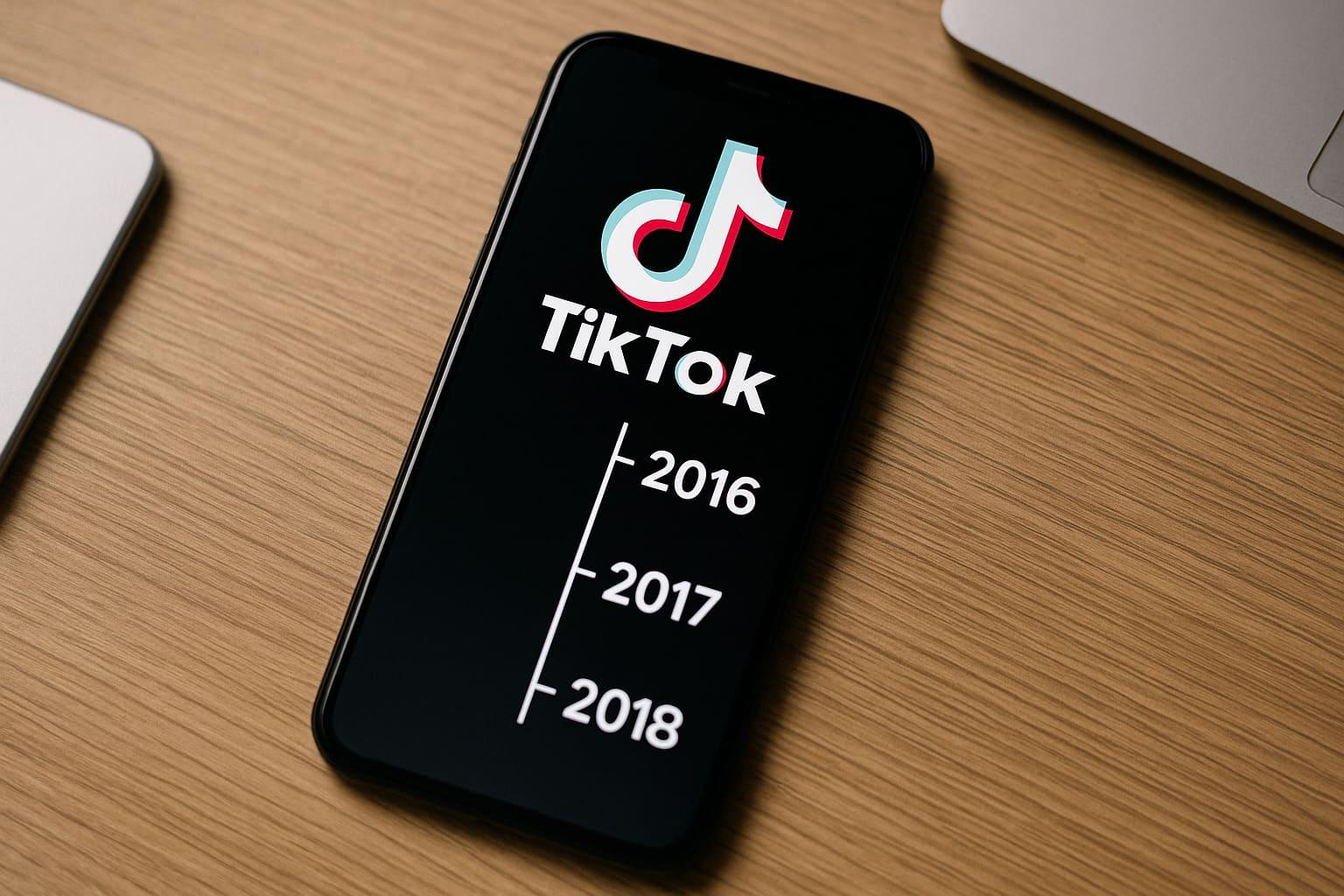
- September 2016: Start from Douyin in China (iOS & Android).
- 2017: TikTok is being rolled out internationally.
- November 9, 2017: ByteDance buys Musical.ly (according to the Wall Street Journal, purchase price up to USD 1 billion).
- August 2, 2018: Musical.ly becomes TikTok merged - merging two communities and boosting growth.
Mini conclusion: The question „when did tiktok come out“ has two answers: 2016 (China, Douyin) and 2017 (international). The 2018 step explains why TikTok became ubiquitous in Europe and the US in such a short time.
Who is behind it? (ByteDance, Founders & Platforms)
Behind TikTok is ByteDance, founded by the entrepreneur Zhang Yiming. The company first launched Douyin and then rolled out TikTok in other markets - available on iOS and Android. The acquisition of Musical.ly brought millions of young users who were already familiar with short music clips - a perfect match of product and target group.
What specifically changed in 2018?
With the merger on August 2, 2018 were Accounts, videos and followers under the name TikTok bundled together. For Creator, this meant
- A larger global feed: Trends jumped more quickly between countries.
- More visibility for new formats: Comedy sketches, tutorials and storytelling increasingly replaced classic lip-sync clips.
- Faster feature rollouts: Effects, sounds and editing tools spread in parallel on iOS and Android.
How you use the knowledge in practice (content, timing, formats)
Do you want to derive real benefit from history? Here are some simple points that can be implemented immediately:
- Understanding trends: Many mechanics (challenges, sounds, hashtags) come from the Musical.ly era. Use Sound remixes and Challenges remains strategic - the „DNA principle“ still works today.
- Short & crisp storytelling: Won since 2018 Story-based short video on the move. Test Hook in the first 2-3 seconds, clear structure (Hook → Info → Payoff) and Subtitle for silent spectators.
- Post according to the platform: Videos should mobile-optimized (9:16, strong contrasts) and internal app be edited (texts, effects, CapCut templates).
- Test regularly: Every week 2-3 upload times try it out (e.g. early evening slots), check analytics and keep the slot that best suits your needs. longest watchtime brings.
Background: Why TikTok in particular took off
- Shorter learning curve: Editing, effects, sounds - all in one app, with a lower threshold than classic video editors.
- Sound centering: Music & sounds push trends - this was already strong with Musical.ly and continued with TikTok.
- algorithm: The „For you“ feed also recommends early on unknown accounts - your video can get instant reach with the first good watch time.
- Creator ecosystem: With challenges, duets, Stitch & Live, new ideas are constantly being created. Forms of interaction.
Mini story: Two posts, two worlds
Imagine uploading a Douyin video in China in 2016: lip-sync, beat cuts, quick edits - it fits perfectly. In 2018 in Germany, you upload the same clip - but TikTok users suddenly love Mini stories and sketchy dialogs. What do you learn? Trends shift with the community. Observe Sounds, subtitle styles and Hook pattern - and adapt your videos accordingly.
Frequently asked questions (FAQ)
Did TikTok launch in 2016 or 2017?
Both are true - 2016 as Douyin in China, 2017 as TikTok international.
When was Musical.ly converted into TikTok?
On August 2, 2018 - a decisive milestone for global growth.
Who „invented“ TikTok?
TikTok belongs to ByteDance (Founder Zhang Yiming). The purchase of Musical.ly (2017) brought the communities together.
Are there differences between iOS and Android?
Today, features usually appear in parallel. Important are Format (9:16), Hook and good soundtrack - not the operating system.
Did TikTok only become known in Germany in 2018?
That is correct: International launch 2017the big push came in 2018 through the merger with Musical.ly. From then on, the app grew rapidly in Europe.
Is TikTok the same as Douyin?
No. Both originate from ByteDance and are technically similar, but Douyin is the version for China (own app store cosmos, own rules), TikTok is the international App. The 2016 origin explains the lead in features and formats.
Conclusion
when did tiktok come out? International 2017 - based on the China app Douyin (2016) and since August 2, 2018 additionally reinforced by the Merger with Musical.ly. If you know how these steps work together, you'll understand why TikTok has grown so quickly - and how you can become visible today with the right format, timing and hooks.
Bigfollow
Social media team
BigFollow is the social media shop of PortalWeb GmbH in Altdorf, Switzerland. Since 2022 we have delivered followers, likes and views with a focus on quality so that profiles really grow. Our social media team writes the guides and tutorials on the blog.
Learn more about Bigfollow