Contents(9)
- 1Finding sponsors: How your club should proceed
- 2Sponsorship, donation, or supporter contribution: What's the difference?
- 3Which companies are a good fit as sponsors for your club?
- 4What do you offer sponsors? Packages with social media
- 5Convince sponsors with Instagram insights
- 6How to write a sponsorship request
- 7Keeping sponsors: Show appreciation and report back
- 8Conclusion: Ask personally, offer clearly, report honestly
- 9FAQ about sponsors for clubs
In short: You'll most likely find sponsors in businesses from your region that match your club, such as a garage, bakery, or local bank. Offer them a clear package with benefits like team jerseys, advertising boards, and Instagram posts, and back up your reach with real data from your Instagram insights. The best approach is to ask in person, with a short sponsorship folder.
Finding sponsors is one of the biggest challenges for many clubs. According to the 2022 Vereinsstudie from Swiss Olympic, only one in three sports clubs in Switzerland has income from advertising and sponsorship. Here you'll learn step by step which companies are a good fit, what you can offer, and how social media can help you.
Finding sponsors: How your club should proceed
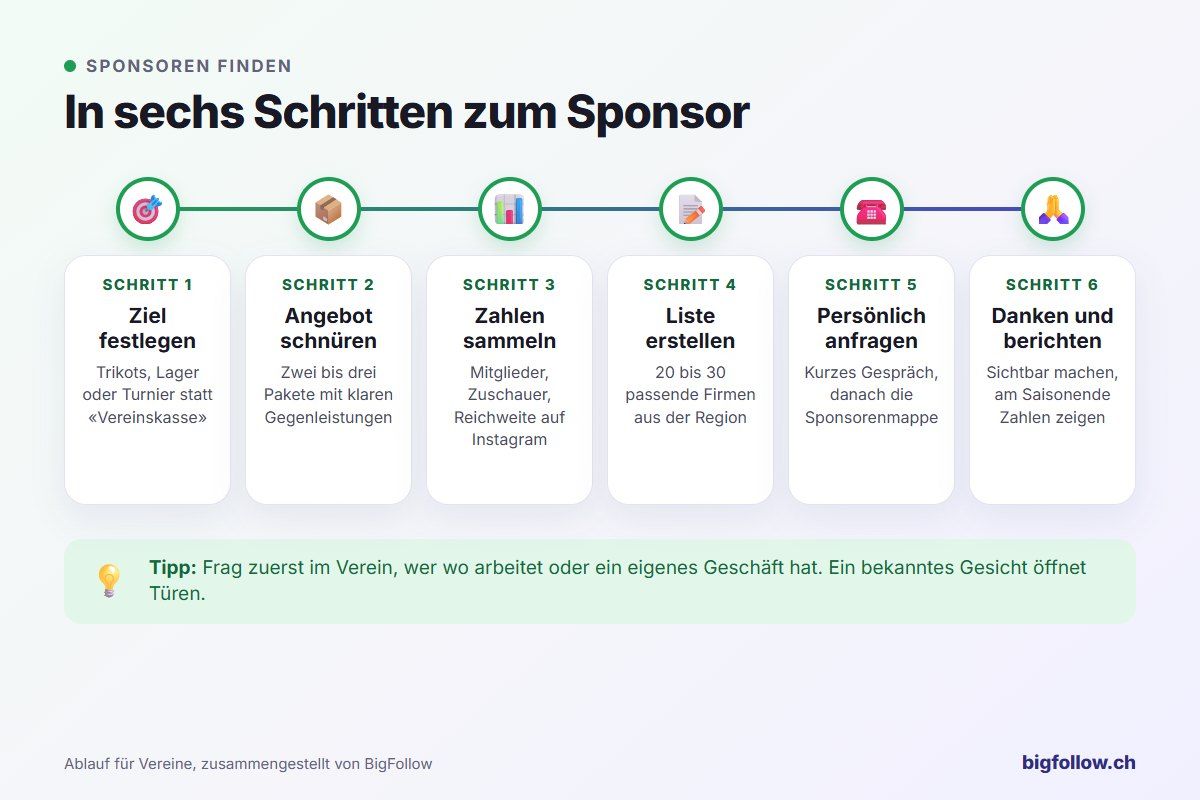
A club finds sponsors by deliberately approaching suitable companies and offering them clear benefits in return. If you only ask for money, you rarely get a yes. If you show what the company gets out of it, you'll succeed much more often. Here's how to do it:
- Set your goal: What do you need the money for? New jerseys, a training camp, or a tournament are more tangible than «the club funds».
- Create your offer: Two to three packages with clear benefits in return.
- Gather your numbers: Members, spectators, followers, and reach on Instagram.
- Create a list: 20 to 30 companies from your region that fit with you.
- Ask in person: A short conversation, then follow up with your sponsorship folder.
- Say thanks and report back: Make your sponsors visible and show at the end of the season what it brought you.
Sponsorship, donation, or supporter contribution: What's the difference?
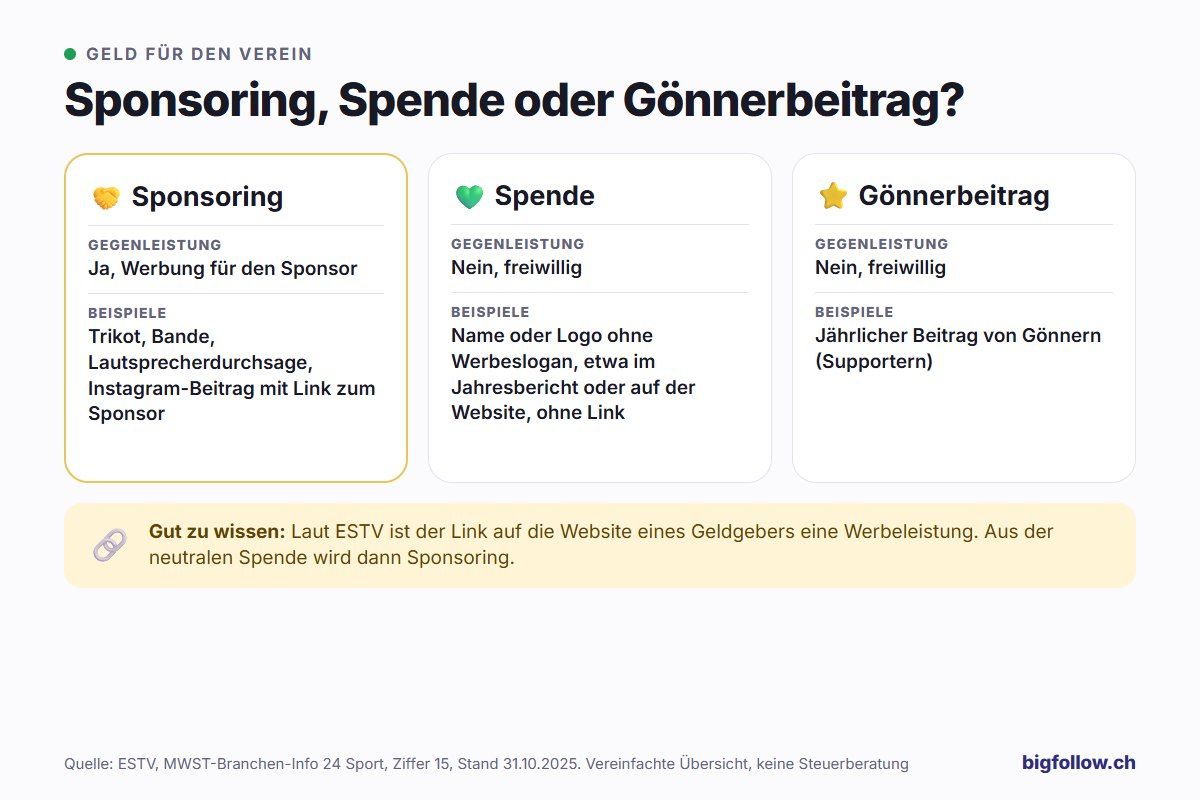
With sponsorship, the club provides something in return, usually advertising. A donation or supporter contribution, on the other hand, is voluntary and without any benefit in return. The difference is not just a matter of wording, but also important for tax purposes.
The Swiss Federal Tax Administration (FTA) states in its industry information for sports: If a donor is mentioned in neutral form, i.e., with name or logo but without an advertising slogan, it remains a donation. This also applies on the internet. However, if you link to the donor's website, that is an advertising service and therefore sponsorship.
| Type | Benefit in return | Example |
|---|---|---|
| Sponsorship | yes, advertising | Logo on the jersey, advertising board, Instagram post with link to the sponsor |
| Donation | no | Logo without slogan in the annual report or on the website, without link |
| Supporter contribution | no | Annual contribution from supporters |
For most clubs, this has no consequences for VAT: According to the FTA, non-profit sports clubs run on a volunteer basis are only subject to tax from CHF 250'000 in annual turnover. Jersey advertising, advertising boards, and announcements via loudspeaker are always considered advertising. If you're close to this limit, clarify the details with your accountant or the FTA.
Which companies are a good fit as sponsors for your club?
The best fit are companies that want to reach the same people as you do: families, young people, or sports enthusiasts from your region. A local sponsor sees the benefit directly because your customers are on your sports field. Good candidates include:
- Local businesses: Garage, bakery, electrician, painting business, restaurant.
- Banks and insurance companies with a branch in your municipality.
- Sports shops and physiotherapy practices that work directly with sports.
- Your members' employers: Ask around the club where people work. A familiar face opens doors.
- Parents with their own business: With junior divisions, often the most obvious source.
Platforms like Sponsoo or findasponsor bring clubs and companies together online. They don't replace your personal network, but they complement it.
What do you offer sponsors? Packages with social media
Offer two to three fixed packages instead of negotiating each time. Complement classic benefits like team jerseys and advertising boards with social media, because you can measure how many people saw the sponsor there.
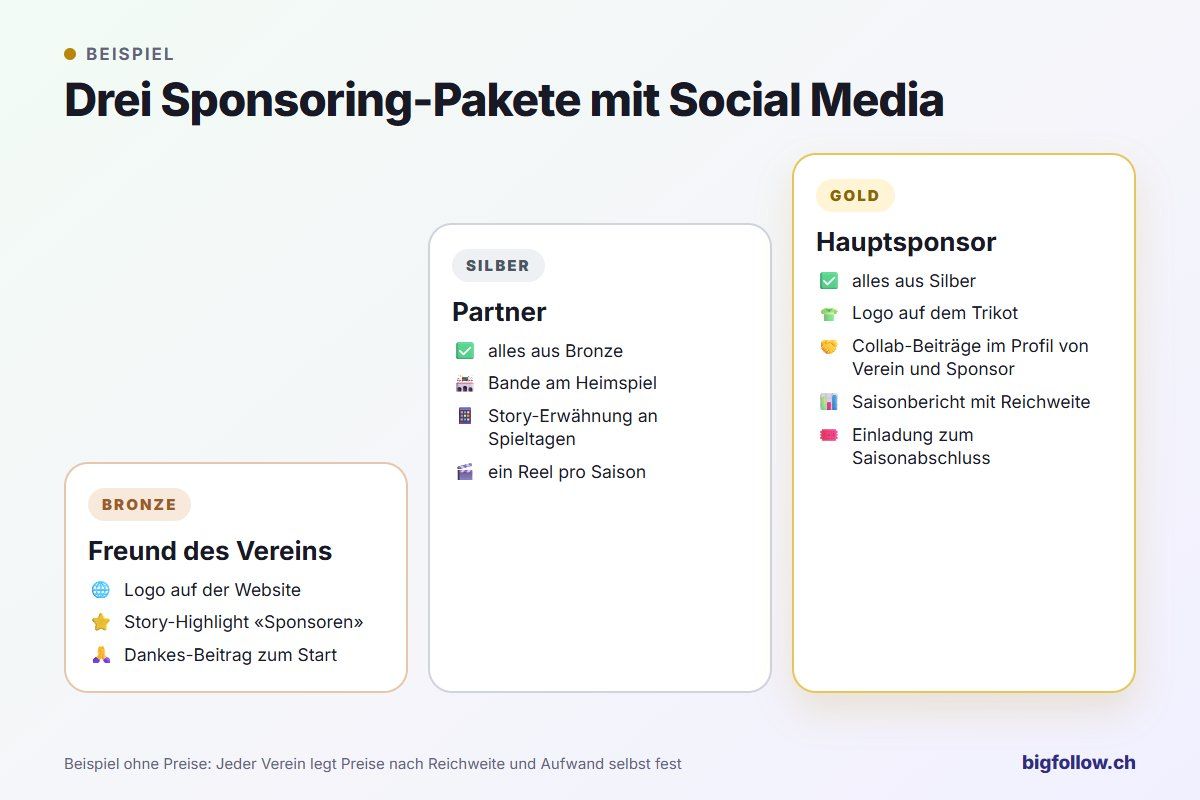
- Collab post: A joint post appears in both the club's and the sponsor's profile, on Instagram with up to five partners. Find out more in Social Media for Clubs.
- Story with mention: On match day, at the tournament, or when unveiling the new team jersey.
- Story Highlight "Sponsors": Permanently visible in the profile.
- Reel: For example, "We test the new balls from …". Find out how Reels work in What is a Reel on Instagram?
Label sponsored posts on Instagram correctly
You must label paid posts on Instagram as advertising. According to Meta's Branded Content Guidelines, every post for which you receive money or free products needs the label "Paid Partnership". This applies to posts, Stories, and Reels.
Here's how: Enable Branded Content Tools in your settings and tag the sponsor as a brand partner when posting. The sponsor needs their own professional Instagram account and must confirm the tag. If you're unsure whether a post qualifies, add the label: it creates clarity for everyone.
Convince sponsors with Instagram insights
Sponsors want to know how many people they're reaching. With a professional Instagram account, the insights show you exactly that: reach, interactions, and the composition of your target audience. Find out how to set up such an account in What is a professional account on Instagram?
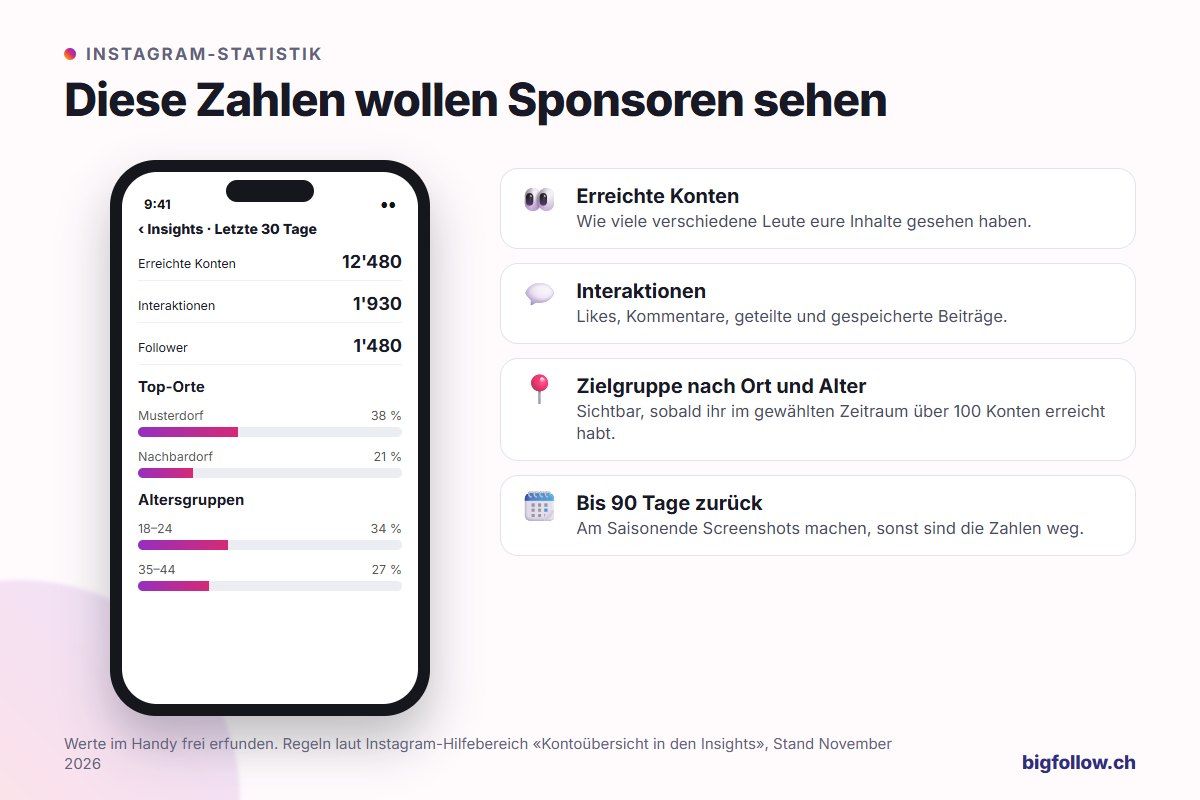
- Accounts reached: How many different people have seen your content.
- Interactions: Likes, comments, shared and saved posts.
- Audience: Age and location of your followers. According to the Instagram Help Center, you only see this once you've reached over 100 accounts in your chosen time period.
- Time period: Instagram shows insights for up to 90 days back. Take screenshots at the end of the season, otherwise the numbers will be gone.
Show honest numbers. If you tag a sponsor as a paid partner, they'll see the insights for that post themselves anyway. Find out when most of your followers are online in Best time to post on Instagram.
How to write a sponsorship request
The best request is short, personal, and shows the value for the company. Call first or visit in person, then send a sponsorship package with these parts:
- Who you are: Club, sport, number of members, teams, region.
- Who the sponsor reaches: Spectators per game, followers, reach, target audience.
- What the money is for: A concrete project.
- Packages: Services in return and prices at a glance.
- Examples: Two or three photos or posts with previous sponsors.
- Contact: A contact person with phone number.
An introduction could look like this: «We are FC Musterdorf with 180 members and 120 juniors. For the upcoming season, we're looking for a partner for our junior team kits. Your logo would be visible at every game, on Instagram, and on our website.»
Keeping sponsors: Show appreciation and report back
Keeping an existing sponsor is easier than finding a new one. These three things help the most:
- Thank them publicly: A post at the start of the partnership and mentions of successes.
- Invite them: To a home game, season finale, or club event.
- Season report: A page with photos, reach of sponsor posts, and an outlook for the next season.
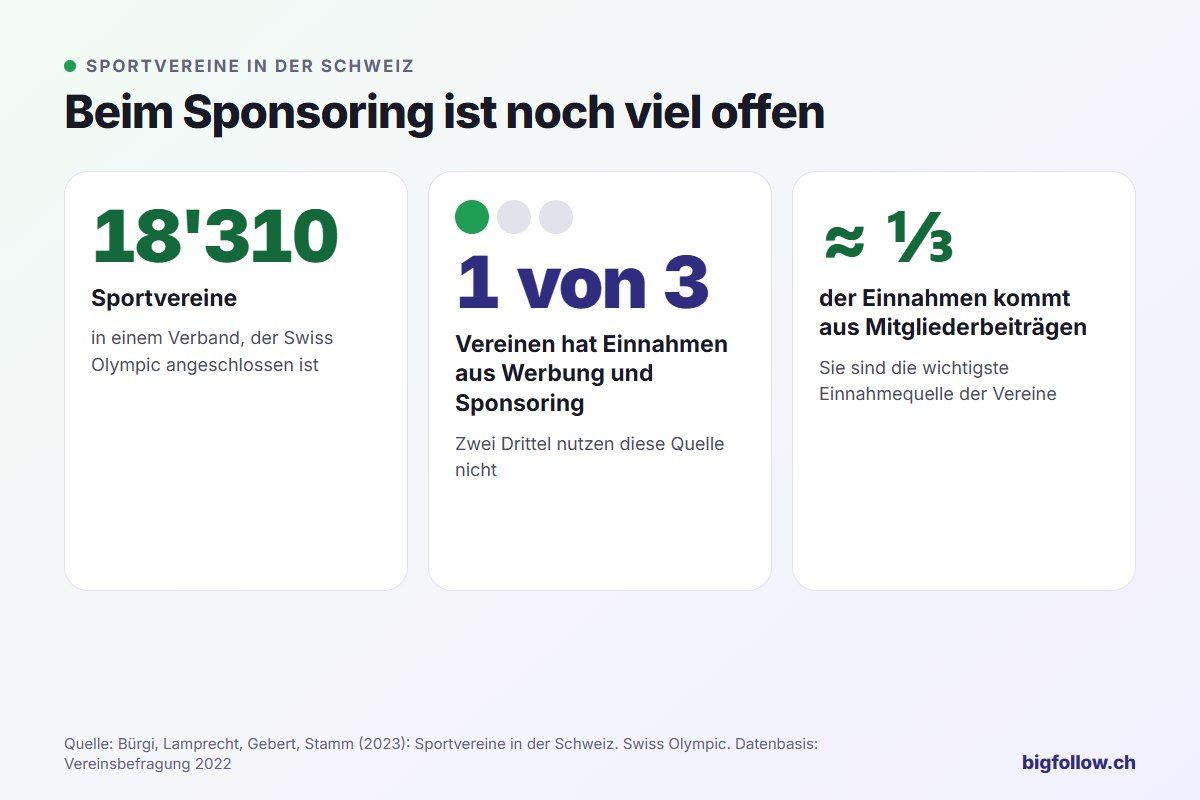
The figures show how much potential is still untapped: According to the 2022 Club Survey, there are 18'310 sports clubs in Switzerland, and membership fees account for just under a third of their revenues. Sponsoring is an opportunity to diversify revenues beyond membership fees.
Conclusion: Ask personally, offer clearly, report honestly
Finding sponsors works when you personally approach suitable companies from your region and offer them a clear package. Social media makes the services in return measurable and more attractive for sponsors. Start with a list of 20 companies and a simple package, and report at the end of the season what it achieved. More members and spectators also make you more interesting to sponsors – you'll find ideas on that in Member recruitment for clubs.
FAQ about sponsors for clubs
How can you find sponsors?
Personal requests to companies from your region that fit your club are most successful. First ask around in the club to see who has contacts, for example through their employer or their own business. Online platforms like Sponsoo or findasponsor can help, but they don't replace personal networks.
Which companies offer sponsoring?
Basically any company that benefits from your visibility. For clubs, these are mainly local businesses like garages, bakeries, restaurants, banks, insurance companies, sports shops, and physiotherapy practices. Large corporations often have their own application form on their website where clubs can submit their project.
How do I get a sponsor for my club?
With a clear offer and a concrete project. Show who the sponsor reaches, for example spectators per game and reach on Instagram, and what they get in return. Call first or visit in person, then send a brief sponsorship package and follow up after a week.
How can I approach sponsors?
Best in person or by phone, then in writing with a sponsorship package. It should include who you are, who the sponsor reaches, what you need the money for, your packages with prices, and a contact person. Mass emails to many companies rarely succeed.
Does a club have to pay tax on sponsoring?
Usually not for VAT: According to the FTA, non-profit sports clubs run on a volunteer basis are only subject to tax from 250'000 Swiss francs in annual turnover. If you exceed that, sponsoring with advertising is taxable, a donation that is neutrally named is not. If you have questions, the FTA or a trust office can help.
Bigfollow
Social media team
BigFollow is the social media shop of PortalWeb GmbH in Altdorf, Switzerland. Since 2022 we have delivered followers, likes and views with a focus on quality so that profiles really grow. Our social media team writes the guides and tutorials on the blog.
Learn more about Bigfollow